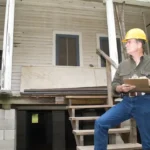

Picture this: You are at your kitchen table drinking your Saturday morning coffee. You see a stranger with a clipboard in your backyard, looking up at your roof or checking your fence line. They were not invited by you. You never called for an inspection. Is this legal? So they can do that?
And that question makes many homeowners nervous. Growing up, we think our castle is home. For a reason, we have fences and locks. It violates your privacy to think that some government official or Building Inspector could come onto your land and walk around without asking.
Property access is something we deal with every day at Straight Arrow Property Inspection. We go there usually because you invited us; you go to buy or sell a house and want to know what’s under the hood. But municipal building inspectors follow different rules. They enforce city codes, zoning laws, and safety codes.
General Rule: Permission Is Usually Required
Start with the good news. In the US, your privacy matters a lot. The Fourth Amendment in the Constitution specifically protects it. People think the Fourth Amendment prevents police from searching your house for proof of crime without your warrant. But the courts have said it extends to administrative searches too.
These include building inspections.
A building inspector or code enforcer can generally not break into your home or secure backyard without your permission. If they come knocking on your front door asking to come in, you say no, not at this time.
By having a fence, a gate or maybe a “No Trespassing” sign you’re saying this is private property. An inspector cannot hop the fence because they want to. They typically visit the front door, knock and you can ask for consent to examine the area.
Usually, this is called consent. Most homeowners are cooperative. Most people say yes to an inspector asking to look at a report about a drainage issue. But technically speaking, you have the keys. You deny them entry, and they usually go find a “Plan B.” You cannot let them just push past you and into your living room because they work for the city.
But that rule is about private areas. You have a mailman-friendly front walkway or a street-facing driveway—an inspector can usually walk up those paths just like anyone else. Whatever is visible from the street or sidewalk, can they see? This is called the “plain view” doctrine. Your falling-down porch is so clearly seen from the public sidewalk that they didn’t even need to come inside your home to see it for themselves.
When Inspectors Are Allowed to Enter Without Consent
If the rule is “ask for permission,” then why do we hear about inspectors turning up unexpectedly?? It’s because the rule contains exceptions. Sometimes your permission isn’t needed, or you may have already given permission without realizing it.
One example is open permits. You sign a document granting the building department the authority to inspect the work when you apply for a build permit, for example, to build a deck or finish a basement, when you apply for a build permit.
Just picture it this way: You asked the city to build. They said yes, so long as they can check the work. By signing that permit application, you give them “implied consent.” If you have an active permit open, the inspector can come check the work during reasonable hours. Refusing to let them in doesn’t give them the right to kick your door down, but they can take your permit away or place your project on “Stop Work” orders, a total freeze.
Businesses also have different treatment than residential homes. In your restaurant or shop, inspectors like the fire marshal or health inspector may enter during business hours without asking first if you own it or not. This is simply because the public safety danger is greater and the business is open to the public anyway. But for your private hom,e the bar is higher.
Emergency Situations and Public Safety Concerns
It’s the big exception. Any bets on immediate danger are off. The law understands that in a crisis safety comes before privacy. Until you give them permission and a warrant, a building inspector or fire marshal is able to get into your house under the presence of “an exceptional circumstance,” legal terminology for an emergency.
But what constitutes an emergency anyway? It must be something immediate and dangerous. This isn’t going to be some tall weed in the garden or a two-inch fence too high.
Imagine a neighbor says they smell gas from your house, but nobody is at the door. No fire department and no building inspectors are going to sit around and watch a judge sign a paper. They are coming in to prevent the neighborhood from blowing up.
Another example is structural collapse. An inspector can enter a retaining wall that is buckling and looks like it may crash down onto the sidewalk or a neighbor’s home if it is a safety hazard and tape off the area if it is a danger.
And in those moments, the inspector isn’t looking for code violations to fine you, he’s looking for moments of pure joy. They may be saving lives or property. After the emergency passes, though, they lose that right to be there. They cannot use a gas leak to sneak around your attic doing unpermitted wiring work related to the leak.
Inspections with a Warrant or Court Order
We refuse to let an inspector in; there is no emergency. Does that mean they give up hope? Not necessarily. When a code enforcer believes there’s a violation inside your house or in your backyard, they could go before a judge. They can apply for what’s called an administrative warrant or an inspection warrant’.
Not exactly like a criminal search warrant that police use, but the result is similar. The inspector has to write why they think the problem is. They cannot just say, “I have a guess.” They need evidence. Perhaps another neighbor showed photos of illegal construction. Maybe they see part of that violation from the street.
They will sign the warrant when the judge finds “probable cause” to check the property. You can say no once the inspector has that piece of paper.
In case they return with a warrant, they can legally get into the locations called on the warrant. Stopping them at that point could land you in jail for obstruction or fined.
Areas Considered Public vs. Private Property
Realizing where “public” ends and “private” begins is helpful here. The legal term is “curtilage.” Curtilage is land immediately around your house that contains your home’s private activities. Your fenced backyard? That’s curtilage. Your front porch? Usually curtilage. Such places are protected.
Not necessarily, though, open fields or areas far from the house might not be. Plus, anything the public can get hold of is usually fair game for an inspector.
Know about easements too. Many properties are utility easements—strips of land that the power company or local water department has the right to use. If an inspector is checking a utility line in an easement, they might be on that strip of your land without asking you first.
What to Do If an Inspector Shows Up Unannounced
It can be weird opening your door and seeing a city official there. You might skip a beat. Don’t panic. So here is a game plan for handling it calmly:
First ask for identification. Anybody can buy a hard hat and a clipboard. Make sure this person works for the city or municipality. See their badge or ID card. Make a note of their name & department. Whether a real professional from Straight Arrow Property Inspection or the city cares about this, no one will ever mind you asking this; they expect it.
Second, why are they there? Be polite but direct. “Why come here today?” They should tell you what they are checking. So you hear things like “We got a complaint about a fence” or maybe “We are examining permits for the neighborhood.”
Third, choose whether you let them in. No need to say yes immediately. However, if it’s a terrible time, you have an ill child at home, or maybe you work, you can say, “Now isn’t a good time.” Can we hold that for later? “Most inspectors are fairly reasonable people. They do a job. If you ask politely if they mind rescheduling, they will usually accept.
Your Rights as a Property Owner or Tenant
You have rights whether you own the building or just rent it. For homeowners, you’re the king or queen of the castle. You choose who enters unless a judge orders otherwise. You know what the inspection is for. You may follow the inspector around on your property. You should never leave them wandering off alone. Stay with them, ask questions & see what they write down.
And finally, you appeal. You don’t just have to pay if an inspector comes on your property and issues a citation that you think is unfair or incorrect. And every city has an appeals process. So you can go to a board meeting and say that the inspector made an error or crossed his line.
How Local and State Laws Affect Inspector Authority?
We talked about general rules, but real estate laws are extremely local. What works in rural Texas may work in downtown San Francisco.
Local ordinances give inspectors power. In some strict cities, local laws might say hooking up to the city water supply means agreeing to certain inspections. Other rural areas give the government very little power to come onto your land.
For example, point-of-sale inspections are big in some towns. This particular law says the city should inspect your house prior to you selling it to see if it’s up to code. In those towns, you can’t even sell your home without letting the inspector in. Refusal means the sale can’t go through.
Should you ever be uncertain or feel an inspector is bullying you, call a real estate attorney or a professional private inspection company like Straight Arrow Property Inspection. We are private inspectors, not code enforcers, but we know the area. We tell you, “Oh, the city is really strict about that here,” or “No, that sounds unusual; double-check that.”
Conclusion
For all those who are renovating, buying a new place, or just want to know that your house is safe without the threat of government fines, private inspectors like us come in. We work for you at Straight Arrow Property Inspection. You know what your property is like so you can sleep at night.
Knowing your rights protects your investment. So the next time someone drops by with a clipboard at your door, you can open it knowing exactly where you stand.